
Rodent Control in Georgetown TX | Mice & Rats Exclusion Experts
Serving Wolf Ranch, Sun City, Old Town and all of Williamson County. TDA licensed. Same-day visits. Upfront pricing.
Most Georgetown homeowners find out they have a rodent problem one of three ways. They find droppings behind the baseboards or in the attic. They hear scratching in the ceiling at night. Or they smell something coming from the vents and cannot find the source. All three mean the same thing: rodents are already inside and the problem is growing.
- Same-day visits available
- Entry point sealing included
- Pet safe methods
- 100% written guarantee
- Residential, rental and commercial properties served
How Georgetown Homeowners Find Out They Have a Rodent Problem
You do not always see a mouse before it becomes a problem. These are the warning signs Georgetown homeowners call us about every week.
Droppings behind baseboards or in the attic
The most common discovery. Dark, rice-shaped pellets near walls, in cabinets or along the attic floor mean an active infestation, not a one-time visitor.
Scratching or scurrying sounds at night
Rodents are most active between midnight and 4am. Sounds in the ceiling or inside walls almost always mean nesting above your living space.
A foul smell from the vents or floor
A strong, musty smell coming from ducts or under the floor usually means a rodent has died inside. This needs to be located and removed quickly.
Chewed wiring, insulation or wood
Rodents gnaw constantly to keep their teeth short. Chewed wiring in the attic is a fire risk. Chewed insulation creates moisture and mold pathways.
Seeing a rodent during the day
Seeing a live mouse or rat in daylight usually means the infestation is large enough to push individuals out of the nest to find food.
Entry gaps in the garage, basement or foundation
Mice can fit through a hole the size of a dime. Rats need about a quarter-sized gap. Holes in the garage or foundation are an active invitation.
A Rodent Problem Never Stays Small
A single pair of mice can produce more than 60 offspring in 90 days. What starts as one mouse in the garage becomes a wall-to-wall problem in a season. Rodents also gnaw constantly, and chewed wiring is a leading cause of house fires. The sooner you seal them out, the less damage they do.
The Rodents We Deal With in Williamson County
Three rodents cause nearly every problem in Georgetown. Each behaves differently, and treating one like another is why so many do-it-yourself efforts fail.
Roof Rats
Roof rats are climbers. They travel along fences, power lines, and tree branches, then enter through gaps in the roofline, soffits, and vents. In Georgetown, mature live oak and pecan canopy gives them a highway straight onto the roof. Once inside, they nest in attics and upper wall voids — the first sign is usually scratching overhead at night. Roof rats measure ten to twelve inches with a tail longer than the body.
Norway Rats
Norway rats are larger and heavier, and they work at ground level. They burrow under foundations, slab edges, wood piles, and debris, then enter through weep holes, gaps below grade, and openings where pipes penetrate the slab. They are common around Georgetown's commercial areas and restaurant dumpsters. A Norway rat problem often shows up first as burrows along a foundation, not as attic noise.
House Mice
House mice are small, prolific, and the most common rodent in Georgetown homes. A mouse can squeeze through a gap the size of a dime. Sun City residents frequently report mice in garages and laundry rooms first. Displaced field mice from nearby construction push directly into adjacent homes as their habitat disappears.
How do I know if I have rats or mice?
Mouse droppings are small, dark, and pointed at the ends — about the size of a grain of rice, usually found along baseboards and in cabinets. Rat droppings are larger, up to three-quarters of an inch, and cylindrical. Scratching in the attic and roofline usually means roof rats, while burrows along the foundation point to Norway rats. A professional inspection confirms the species and the entry points.
How Our Georgetown Rodent Control Works
We keep it simple and explain every step before we begin. Removal and sealing have to happen together — one without the other does not solve the problem.
Inspection
We walk the full property inside and out, including the attic, crawl space and garage. We find active nesting sites, entry points, droppings and the scope of the problem. You get a clear picture before we quote anything.
Upfront Quote
Based on the inspection, you get a specific number before any work starts. No broad ranges and no surprise charges on the invoice.
Trapping and Removal
We place traps at active travel routes, not randomly. We return to check and remove. For larger infestations, multiple visits are standard until the population is cleared.
Entry Point Sealing
Every confirmed gap gets sealed with materials rodents cannot chew through. This is what stops them coming back. Sealing without removal does not work. Removal without sealing does not work. Both have to happen together.
Cleanup and Sanitization
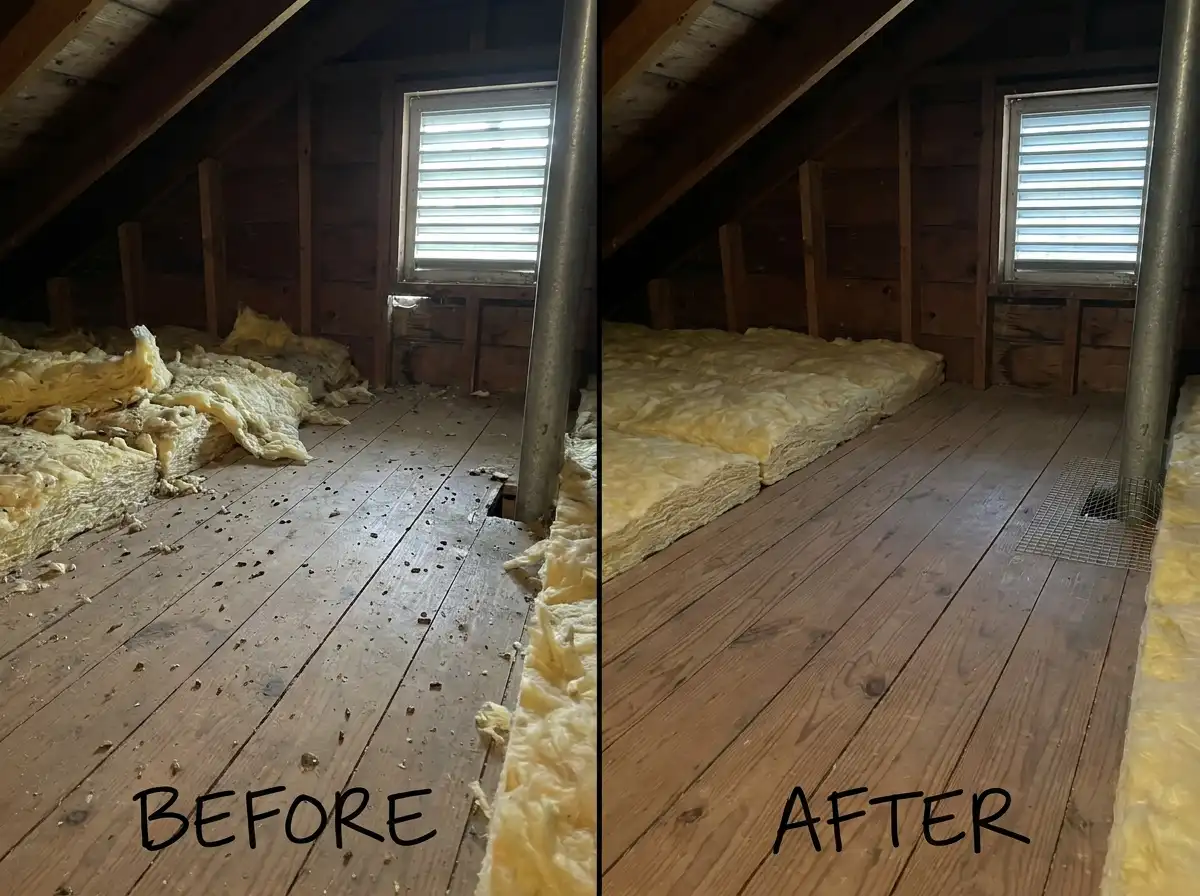
Droppings, urine and nesting material carry hantavirus and other pathogens. We remove contaminated insulation and sanitize the area so the space is safe to use again. Many companies skip this step. We do not.
What if I can smell it but cannot find it?
A foul smell from the floor vents, ductwork or under the deck almost always means a rodent has died inside a wall cavity, under the subfloor or in the HVAC system. We use a systematic process to locate the source, remove it and treat the area so the smell clears and does not return. If you can smell it but cannot see it, that alone is reason to call.
Get a Clear Quote Before We Start Anything
(737) 379-5045What Does Rodent Control Cost in Georgetown TX?
Your price depends on how severe the infestation is, how many entry points need sealing and whether cleanup is needed. We give you the exact number after the inspection. Here are the typical ranges for Georgetown homes.
| Service | Average Range | Notes |
|---|---|---|
| Rodent inspection | $0 – $75 | Free with treatment, fee without |
| Trapping and removal, one-time | $150 – $400 | Depends on home size and scope |
| Entry point sealing | $200 – $600 | Based on access point count |
| Attic cleanup and sanitization | $300 – $900 | Depends on contamination level |
| Full service (removal, sealing, cleanup) | $500 – $1,500 | Most common Georgetown package |
| Recurring prevention plan | $85 – $175 per visit | Quarterly or bi-monthly |
Most Georgetown homeowners who try one-time trapping without sealing call back within two months. Sealing the entry points is what makes the treatment permanent.
Is Rodent Control Safe for Dogs, Cats and Children?
Are your rodent treatments safe for pets?
Yes. We use tamper-resistant bait stations that dogs and cats cannot access. Interior traps go in places pets cannot reach. Tell your technician about pets before we start so we adjust placement.
Do you use poison bait?
We use bait only in tamper-resistant, pet-proof stations placed in specific locations. For homes with young children or pets on the floor, we lean on mechanical trapping first and discuss every method with you before placing anything.
Do you offer humane removal options?
Yes. Live trapping is available for clients who prefer it. We talk through the options and the trade-offs during the inspection so you can choose what fits your household.
Where We Find Rodents in Georgetown Homes
Attic
The most common nesting site. Insulation is warm and rodents chew it into nest material. Wiring runs through the attic, so gnaw damage here is a direct fire risk. Droppings build up fast and need professional cleanup after removal.
Basement and Crawl Space
Field mice enter through foundation vents and gaps where pipes come into the home. Crawl space infestations are often large before they are found because homeowners rarely check down there.
Inside Walls
Rodents travel inside wall cavities between floors. Sounds in the walls at night and a musty smell without visible droppings usually mean wall nesting. Entry points are almost always at the base of the wall.
Garage
Garages have more entry gaps than any other part of the home. Gaps under doors, around pipes and through unfinished walls are all common entry points. Parked vehicles are also at risk.
Floor Vents and Ductwork
A dead rodent in the ductwork spreads smell through every room when the HVAC runs. This is the most common source of unexplained foul odors in Georgetown homes.
Under Decks and Stairs
Sheltered outdoor spaces with ground contact are prime harborage areas. Rodents living under the deck often move indoors through gaps where the deck meets the foundation.
Rodent Control Across Georgetown and Williamson County
We serve every part of Georgetown, including ZIP codes 78626, 78628, and 78633, and each area has its own rodent pattern:
- Sun City: Residents often report mice in garages and laundry rooms first. Slab homes need close attention at weep holes and utility penetrations.
- Wolf Ranch and western subdivisions: Newer construction on cleared land means displaced field mice pushing into homes within the first year.
- Berry Creek, Cimarron Hills, and Georgetown Village: Mature tree canopy gives roof rats easy roofline access, and established homes have more accumulated entry gaps.
- Old Town and downtown: Shared walls in older buildings let rodents move between properties, and the restaurant corridor sustains year-round rat pressure.
We also serve Serenada, Teravista, and nearby Round Rock, Leander, Liberty Hill, and Jarrell.
Find Droppings? Hear Scratching? Call Now.
We find where they live, remove them and seal every entry point so they cannot get back in. Free inspection. Upfront pricing. No contracts.
(737) 379-5045 — Same-Day VisitFrequently Asked Questions About Rodent Control in Georgetown TX
What are the signs of a rodent infestation in Georgetown TX?
The most common signs are droppings behind baseboards or in the attic, scratching sounds in the ceiling at night, a musty smell from the vents, and chewed wiring or insulation. Seeing a rodent during the day usually means the infestation is already large. Any one of these is enough reason to schedule an inspection.
How do mice and rats get into Georgetown homes?
Mice fit through a gap the size of a dime and rats through a quarter-sized hole. The most common entry points are gaps under garage doors, spaces where pipes enter the foundation, foundation vents, and roofline gaps into the attic. In older Old Town homes, settled foundations create new gaps over time. We seal every confirmed entry point during treatment.
How much does rodent control cost in Georgetown TX?
One-time trapping and removal runs $150 to $400 depending on home size. Entry point sealing runs $200 to $600, and attic cleanup runs $300 to $900. A full service package with removal, sealing and cleanup runs $500 to $1,500 and is the most common choice for Georgetown homes. Your exact price comes from a free inspection.
What is the difference between mice and rats, and does it change the treatment?
Mice are smaller, curious, and stay close to their nest, so they are often caught near where they are seen. Rats are larger, more cautious, and travel further, so they take more time and more strategic trap placement. Rats also cause heavier structural damage. We identify the species during inspection and adjust the plan accordingly.
Do you seal entry points or just set traps?
We do both, and sealing is the part that makes it permanent. Trapping removes the rodents you have now. Sealing stops new ones from getting in. A company that only sets traps is treating the symptom, not the cause. We seal every confirmed gap with materials rodents cannot chew through.
Is the smell from my vents a dead rodent?
Usually yes. A strong, musty smell from floor vents or ductwork almost always means a rodent has died inside a wall, under the subfloor, or in the HVAC system. The smell spreads through the house when the system runs. We locate the source, remove it, and treat the area so the odor clears and does not return.
Do you offer rodent cleanup and sanitization after removal?
Yes. Rodent droppings, urine and nesting material carry hantavirus and other pathogens, so cleanup is not optional for your health. We remove contaminated insulation, clean the affected area, and sanitize it so the space is safe to use again. We also offer standalone cleanup for homeowners who trapped the rodents themselves.
How quickly can rodents come back after treatment?
If entry points are sealed, they do not come back. If a company only trapped and did not seal, new rodents usually find the same open gaps within a few weeks to two months. This is why we always pair removal with sealing, and why a prevention plan keeps the barrier strong in high-pressure Georgetown neighborhoods.
How long does rodent control take to work?
You will usually see a drop in activity within the first few days. Full clearance depends on the size of the infestation. A few mice may be resolved in one or two visits. A large attic or crawl space colony can take several visits over two to three weeks. We keep you updated the whole way and confirm the problem is gone before we finish.
Do you treat commercial properties for rodents in Georgetown?
Yes. We treat retail stores, restaurants, rental properties, and commercial buildings across Georgetown and Williamson County, and we work with property managers, maintenance companies and real estate agents. We can place exterior bait stations, handle interior trapping, and provide documentation for inspections or sale requirements.
Why do I keep getting mice every winter in Georgetown?
Georgetown's mild winters never get cold enough to knock rodent populations back, so mice that move indoors for warmth in fall stay and breed through winter. If they got in once, the entry points are still open. Sealing those gaps and staying on a prevention plan is what breaks the yearly cycle.